Flight Costs
Why Budget Flights Stop Being Cheap After Baggage Fees
Why low headline fares can rise after baggage fees and how travellers can compare the full trip cost before booking.

- Published
- Last updated
- Last reviewed
- 2 sources reviewed
- 4 min reading time
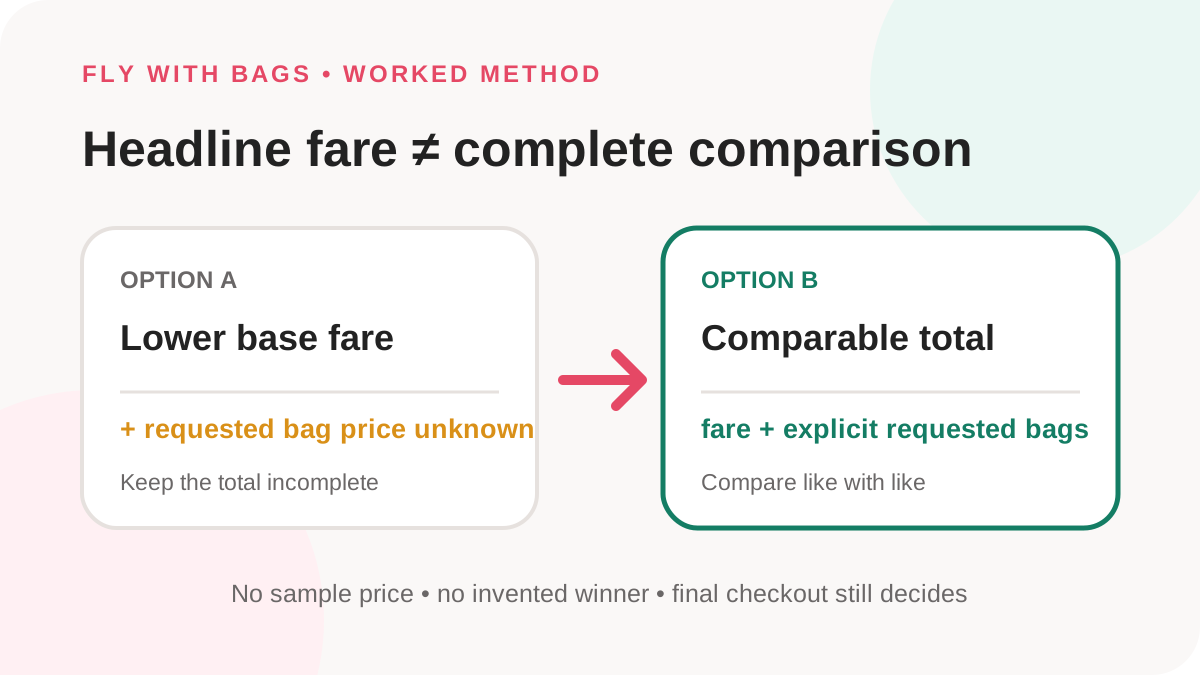
Budget flights can be brilliant. They open routes, lower prices, and make short breaks easier to justify. But a budget flight is only cheap if the final booking still matches the first fare you saw.
The gap between those two numbers is where travellers get frustrated. A fare may start low, then rise when bags and other selected extras are added. The current Fly with Bags app compares its three supported baggage choices; it does not yet add seat or refund-rule costs.
The answer is not to avoid budget airlines. It is to compare them properly.
The base fare is only one part of the trip
Airlines increasingly separate the trip into parts. One passenger may want the lowest possible fare with a small under-seat bag. Another may want an overhead cabin bag, checked luggage, and seats together.
Both passengers are flying from the same airport to the same destination, but they are not buying the same product.
That is why baggage fees can make a flight stop looking cheap. The original fare was only cheap for one version of the trip.
Regulators are paying attention
Surprise fees are not just a traveller complaint. The U.S. Department of Transportation’s current disclosure framework requires airline and ticket-agent websites to alert consumers that extra baggage fees may apply and direct them to that information. Airlines must also keep optional-service fees available in one central place on their websites.
The position changed after a court vacated the DOT’s broader 2024 ancillary-fee rule. The DOT’s 2026 final rule implements that decision and restores the earlier disclosure framework. This guide therefore does not present the vacated 2024 requirements as current law.
In the UK, the Civil Aviation Authority also tells passengers to take luggage add-on costs into account when comparing flights, because some fares include luggage while others do not.
The theme is clear: travellers need the real price earlier.
How baggage changes the result
Baggage fees change results in three ways.
First, they add direct cost. A cabin bag or checked bag can be charged per passenger and per flight sector.
Second, they change which fare is best. A higher fare that includes a bag can beat a lower fare after add-ons are counted.
Third, they create late-stage pressure. Once a traveller has entered passenger details and reached checkout, it is easy to accept a fee instead of restarting the search.
That is why baggage comparison belongs at the beginning, not at the end.
The real-cost checklist
Before booking a budget flight, compare these items:
- Base fare.
- Personal item allowance.
- Cabin bag or overhead-bin access.
- Checked baggage price and weight allowance.
- Seat selection, especially for families or groups.
- Online check-in and airport check-in rules.
- Extra fees for oversized or overweight bags.
- Whether fees apply per flight sector.
- Whether a bundle is cheaper than separate add-ons.
This checklist turns the search from “what is the cheapest flight?” into “what is the cheapest complete trip?”
Why families feel the difference most
For one traveller, a baggage fee may be annoying. For a family, it multiplies.
A small add-on for four passengers on an outbound and return journey can change the ranking completely. Add seat choices, one or two checked bags, and the budget fare may still be good value, or it may no longer be the best option.
Families should compare fares with luggage included from the start because the cost of correcting a bad comparison is higher.
Budget airlines can still win
None of this means budget airlines are bad value. In many cases they are still the cheapest choice after bags are included.
The point is fairness. A backpack-only fare should be compared with other backpack-only fares. A family holiday fare with checked luggage should be compared with other family holiday fares with checked luggage.
When the comparison is fair, the best budget fare has a chance to prove itself.
How Fly with Bags helps
Fly with Bags is built for baggage-aware flight comparison. It helps travellers search returned fares using a small under-seat bag, a larger cabin bag and checked-bag needs. In the latest production check, no complete offer-bound bag total was available, so those prices and the other costs on the checklist still had to be checked separately.
That makes hidden-fee surprises less likely. It also helps good-value airlines stand out when they really are good value.
The best cheap flight is not the one with the lowest headline number. It is the one that still feels smart after the bags are added.