Baggage
EU Cabin-Bag Price Transparency Rules: What Changes and When
New EU cabin-bag rules will make travel sites show a hand-baggage-inclusive fare by default. See what changes, when it starts and which UK trips are covered.

- Published
- Last updated
- Last reviewed
- 6 sources reviewed
- 7 min reading time
That ultra-cheap flight is not being banned. It may simply stop being the default number you see before booking.
Under newly adopted EU rules, the default fare shown before booking must include a piece of hand baggage: the larger cabin bag or trolley case that many basic fares currently leave out. The twist behind the headlines is important. Your trolley bag is not becoming universally free, and airlines will still be allowed to sell a cheaper bagless fare.
The bag fee is not necessarily disappearing. The bag-inclusive price is becoming the default comparison before booking.
The 30-second answer
The Council of the EU gave the law final clearance on 13 July 2026. Once the new rules apply:
- One personal item must be allowed in the cabin at no extra cost.
- A fare including one separate piece of hand baggage must be displayed by default before the booking process starts.
- Airlines may still offer a cheaper fare to passengers who voluntarily travel without that hand baggage.
- Cabin and checked-baggage sizes, weights, item limits and possible charges must be made clear at booking.
- Checked bags do not become free, and there is no common EU size or weight for the larger cabin bag in this law.
The countdown has not been expressed as a fixed calendar date. The final text says the regulation enters into force 20 days after publication in the EU Official Journal and applies 12 months later. Current airline rules still matter until then.
The “free cabin bag” headline gets one thing badly wrong
An earlier European Parliament proposal called for a free cabin bag weighing up to 7kg. That is not what survived in the final compromise.
The final legislative text separates two items:
| Bag type | What the new rule says | What it does not say |
|---|---|---|
| Personal item | One item that is no larger than 40 × 30 × 15cm or fits under the seat must be allowed at no extra cost, subject to safety and security rules. | It does not create extra overhead-bin space. |
| Hand baggage | The default fare displayed must include an allowance for one separate hand-baggage item, subject to cabin capacity. | It does not make that trolley bag free or set one EU-wide size and weight. |
| Checked baggage | Allowances, limits and possible charges must be disclosed clearly. | It does not make a hold bag free or force it into every fare. |
That word “or” also matters. The personal-item definition is not simply a new universal 40 × 30 × 15cm airline limit: an item can instead qualify by fitting under the seat, while safety and security conditions still apply.
If cabin capacity, safety or an aircraft change means an accepted personal item or hand-baggage item has to go in the hold at check-in or the gate, the final text says it must be carried there without a further charge.
What will actually change on a flight-search screen
Today, a backpack-only fare can sit at the top of a results page while the price for an overhead bag appears later. That creates an uneven comparison when another fare already includes the bag.
Under the new rule, airlines, intermediaries and search portals will have to display a fare that includes hand baggage by default before the booking process starts. A bagless price can remain available for passengers who voluntarily choose to travel without that bag.
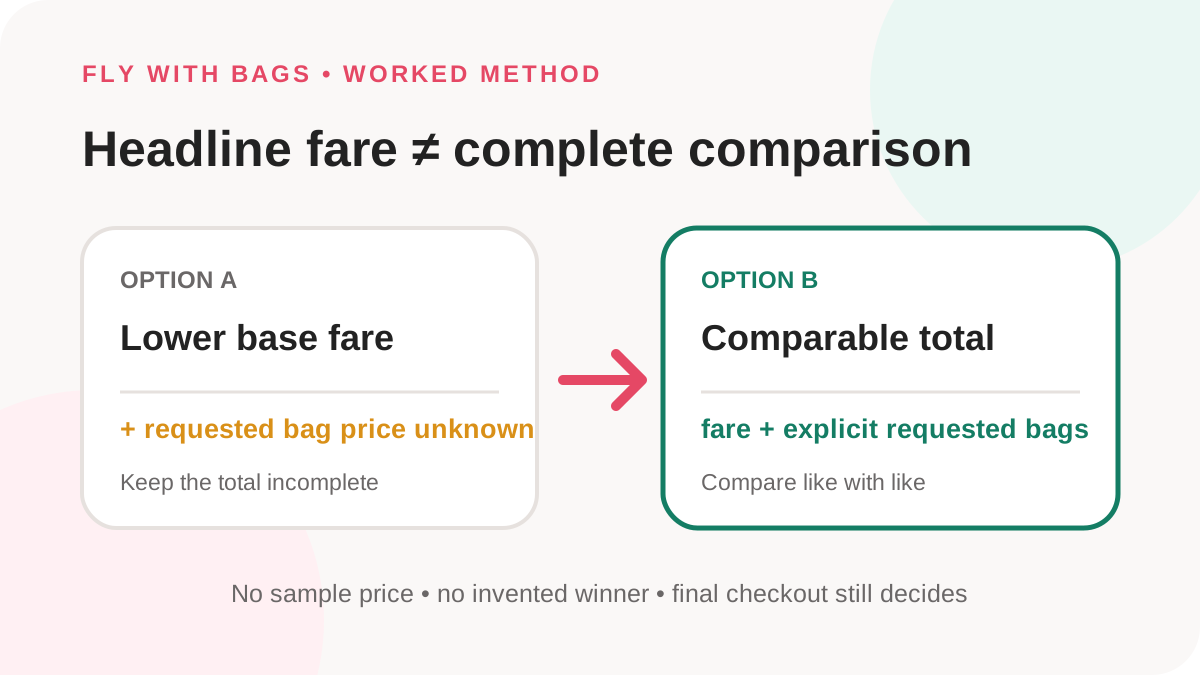
This could make some first-seen fares look higher. It does not prove the underlying trip became more expensive: the displayed product now includes more. That is the same distinction explained in our guide to why budget flights stop being cheap after baggage fees.
Airlines also retain freedom over pricing. The law improves visibility and comparability; it does not cap bag fees or promise that fares will fall.
Will the rule cover flights from the UK?
Sometimes. This is an EU rule, not a blanket new UK baggage law, and coverage depends on the route and the operating airline rather than the passenger’s nationality.
The European Commission’s route-scope summary says the core EU passenger-rights framework generally covers:
- Flights departing an EU airport, regardless of the operating airline.
- Flights departing a non-EU country for the EU when operated by an EU airline.
That means a Madrid-to-Manchester flight is within the core framework because it leaves the EU. A Manchester-to-Madrid flight is within it when the operating carrier is an EU airline, but the same outbound route on a non-EU airline is not generally covered by that core scope. The final text separately applies detailed baggage-information duties to air carriage sold to, from or within the EU.
The UK already has separate price-transparency law. CMA guidance says mandatory charges must be included in the total price upfront. A genuinely optional bag can still be sold separately, so that rule is not the same as making a hand-baggage-inclusive fare the default comparison.
For a return trip, check each direction and the operating carrier. Do not assume that seeing the rule on one leg guarantees identical protection on the other.
When does the EU cabin-bag rule start?
The European Parliament approved the final agreement on 7 July 2026, and the Council completed adoption on 13 July. Adoption is not the same as immediate application.
The legal clock works in two stages: entry into force 20 days after publication in the Official Journal, followed by a 12-month preparation period. The Council summarises that as application 12 months and 20 days after publication.
As reviewed on 19 August 2026, the official announcement gave that formula rather than a calendar application date. Be sceptical of any article claiming an exact start day without linking to the numbered Official Journal act.
We will update this guide when the numbered act and its publication date appear in the Official Journal, because that publication starts both legal countdowns.
What the rule still leaves for you to check
Transparency will not make airline bag policies identical. Before paying, still verify:
- The personal-item dimensions or under-seat condition.
- The larger cabin bag’s size and weight limit.
- Which fare or add-on includes overhead-bin access.
- Whether the allowance applies on every flight sector and operating airline.
- The checked-bag weight, item count and both-way price.
Our cabin bag versus checked bag guide helps choose the right setup. If you are comparing low-cost carriers, use the same bags for every option rather than comparing one airline’s backpack fare with another airline’s trolley-bag fare.
How Fly with Bags helps
Fly with Bags starts with the baggage the traveller expects to take. The current app supports a small under-seat bag, a larger cabin bag and checked bags. In the latest production check, it returned fares and policy guidance but no complete offer-bound bag total, so a manual checkout-price comparison was still required.
That is already the useful habit behind the new law: compare like with like before checkout. Start with cheap flights with baggage included, then confirm the live allowance and final total with the operating airline before paying.
FAQ
Is the EU banning cabin-bag fees?
No. One personal item must be carried at no extra cost. A fare including a separate hand-baggage item must be displayed by default, but a cheaper no-hand-baggage fare may still be offered.
Does everyone get a free 7kg trolley bag?
No. That idea came from an earlier proposal and is not in the final compromise. The larger hand-baggage item’s dimensions, weight and price can still depend on the airline and fare.
Does the personal-item and default-fare rule apply to every flight from Britain to the EU?
No. For these core passenger-rights provisions, a flight from the UK into the EU is covered when it is operated by an EU airline. Flights leaving an EU airport are covered regardless of the airline. The separate baggage-information duties apply to air carriage sold to, from or within the EU, and separate UK rules may also apply.
Will flight prices go up?
Not necessarily. Some default prices may look higher because they include a larger cabin bag. The law changes which fare must be displayed by default before booking; it does not set the underlying fare or bag fee.